Moon in Vedic Astrology
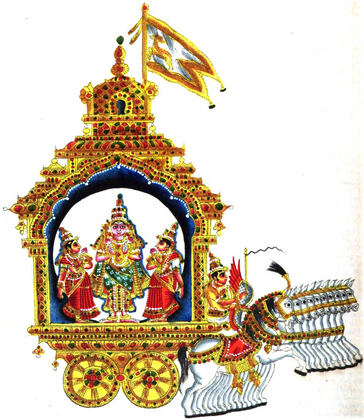
Chandra, the Moon, second graha, is the mind that feels and thinks, mother and nourisher; her goodness depends on her light.

Watch Chandra three evenings in a row and you immediately understand her nature: she changes. The Vedic sky places her second among its grahas and entrusts her with the mind, the part of us that feels and reflects. She is known for a mobile mood, a gentle voice, and an appetite for learning. She also embodies the mother, what nourishes.
Only one sign belongs to her, Karka. She reaches exaltation in Vrishabha, at the third degree, and her fall in Vrishchika. Her moolatrikona is also housed in Vrishabha, from degree 4 to degree 30 for a broad count. Each day she covers some 13 to 15 degrees and travels through the 27 nakshatras during a lunar month.
Should she be called benefic? That depends on her brightness, and you can measure it in several ways. Watch the fortnight: waxing she is benefic, waning she moves among the malefics. Another way: cut the month into three parts of 120 degrees counted from Surya, giving middling strength, very favorable, then nil. Yet another: judge her full from the tenth day of the bright fortnight and weakened from the tenth day of the dark one. A waning Moon touched by a benefic becomes benefic again.
Her two friends are Surya and Budha, and she has no enemy. She finds her directional strength in bhava 4, that of the home, and is powerful at night.
One last point, an important one: the Vedic chart is read from the Lagna, the rising sign, but several houses are also read from Chandra. Whatever applies to the sign of the Moon applies as well, and even more, to the rising sign.
Chandra rules Cancer sidereal, Karka.
Chandra in the 12 houses
- Moon in the 1st housethe body and temperament
- Moon in the 2nd housespeech, family and possessions
- Moon in the 3rd housecourage, siblings and writing
- Moon in the 4th housethe mother, the home and inner peace
- Moon in the 5th housechildren, intelligence and creativity
- Moon in the 6th houseobstacles, health and daily work
- Moon in the 7th housepartnership and associations
- Moon in the 8th housecrises, longevity and the hidden
- Moon in the 9th houseluck, the teacher and faith
- Moon in the 10th housecareer and your place in the world
- Moon in the 11th housegains and friendships
- Moon in the 12th houselosses, foreign lands and letting go
Chandra in the 12 sidereal signs
- Moon in Aries SiderealMesha
- Moon in Taurus SiderealVrishabha
- Moon in Gemini SiderealMithuna
- Moon in Cancer SiderealKarka
- Moon in Leo SiderealSimha
- Moon in Virgo SiderealKanya
- Moon in Libra SiderealTula
- Moon in Scorpio SiderealVrishchika
- Moon in Sagittarius SiderealDhanu
- Moon in Capricorn SiderealMakara
- Moon in Aquarius SiderealKumbha
- Moon in Pisces SiderealMina
When Chandra rules the years, it is the Chandra dasha: 10 years.